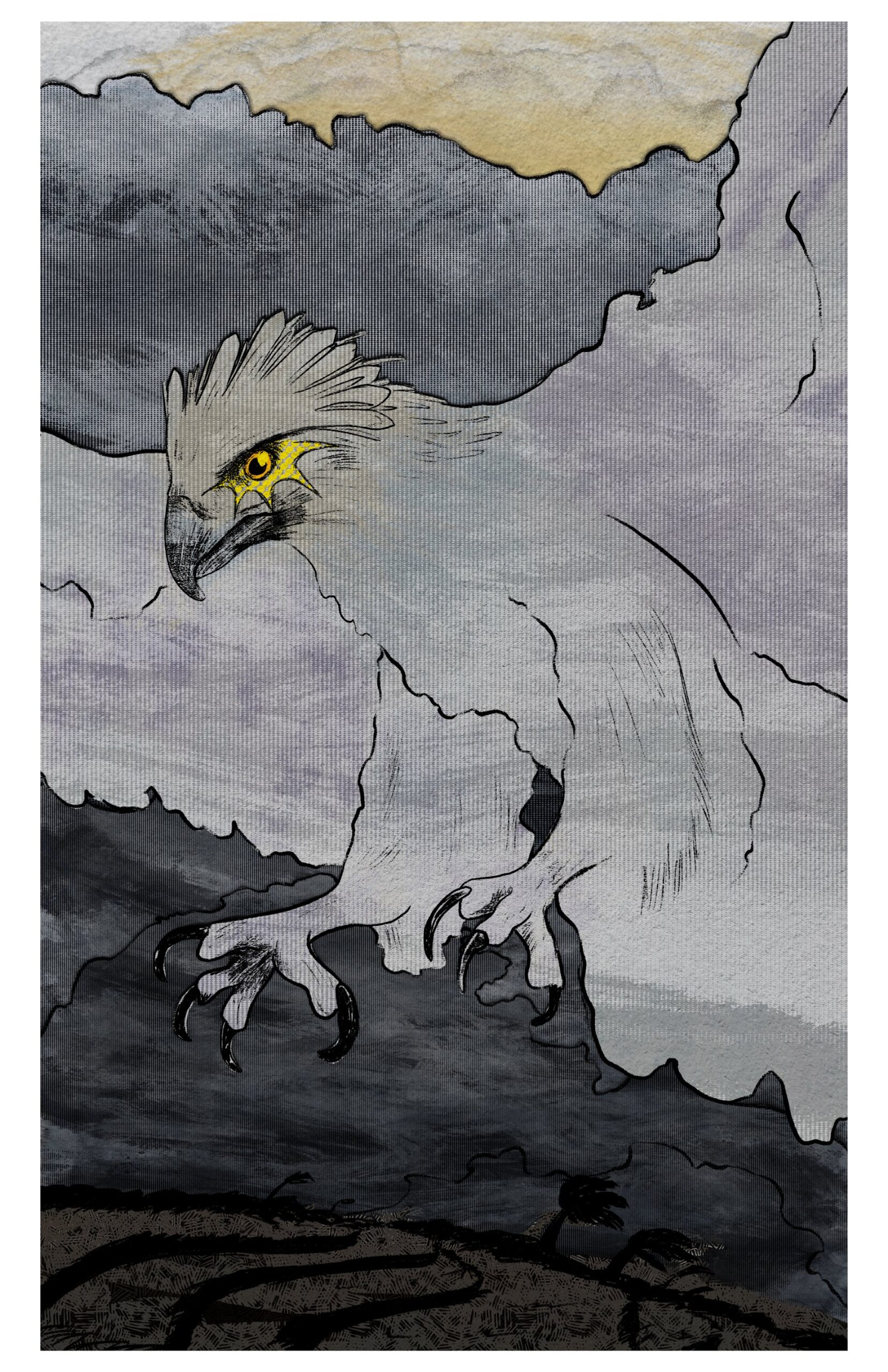
Diwata can be described from godly beings to mere spirits. Here, a bird-like creature embodies and controls the stormy weathers.
Illustration 2 & 3
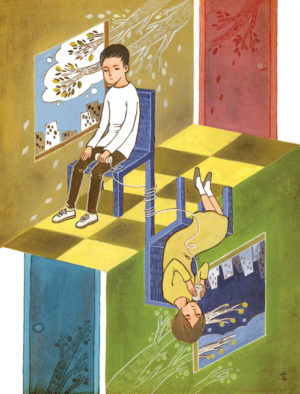
Lampong is a Ilocano “gnomish” shepherd creature, able to transform itself into a deer that lures hunters away from killing innocent animals. One side is the shepherd form, the other is the deer form.
Lampong is a Ilocano “gnomish” shepherd creature, able to transform itself into a deer that lures hunters away from killing innocent animals. One side is the shepherd form, the other is the deer form.
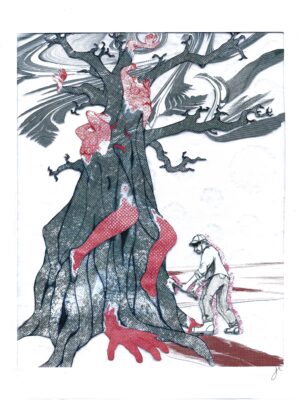
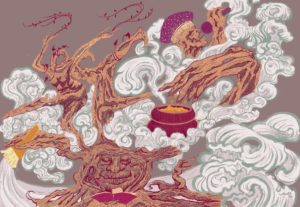
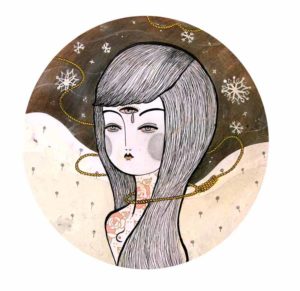
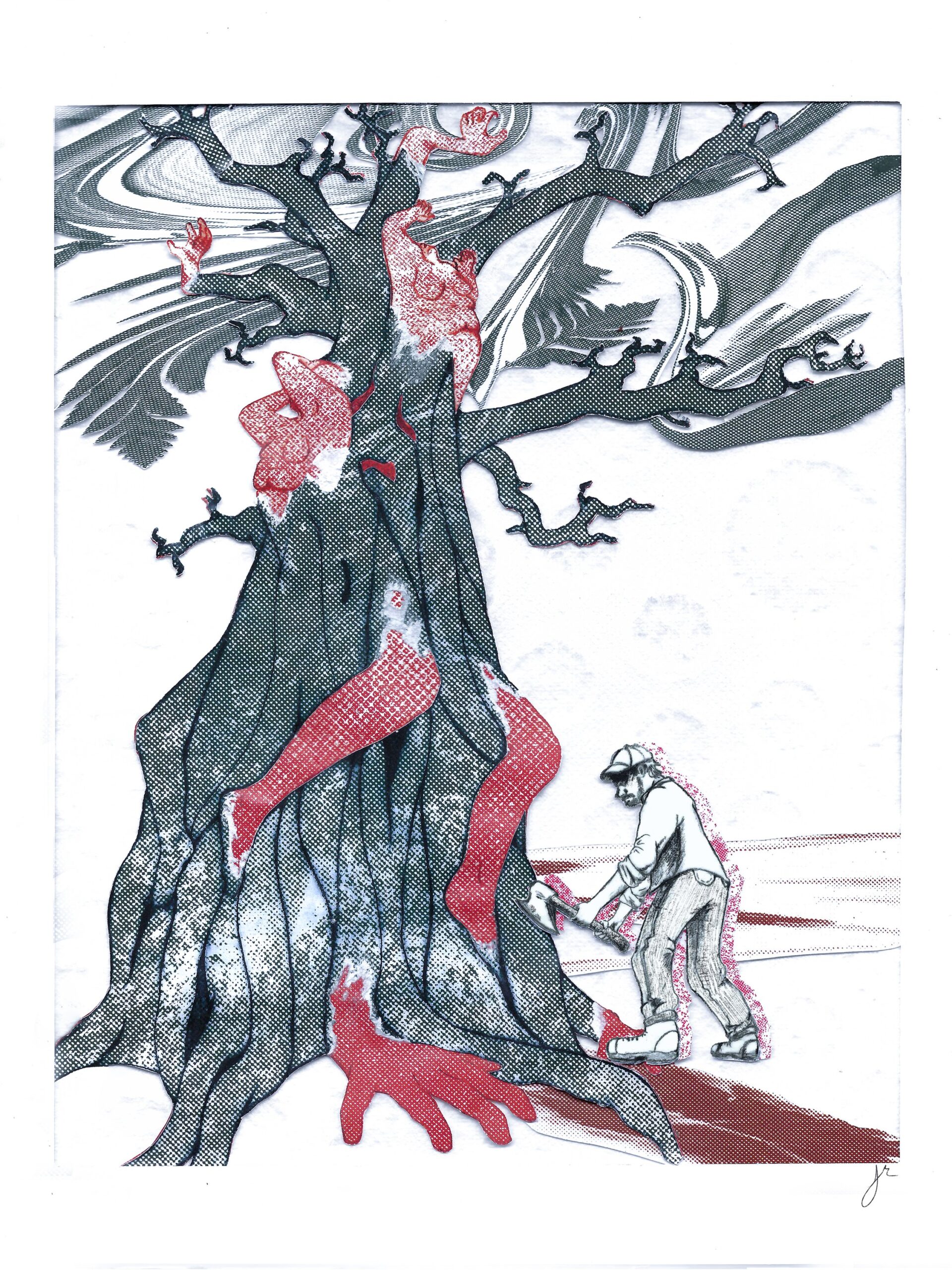
Batibat is a horrific spirit that resides in trees and known to cause nightmares; the phenomenon known as “bangungot” or scared to death from a nightmare. Here it shows a sympathetic POV of the spirit in agony instead of anger, to reimagine the creature as a victim of deforestation.
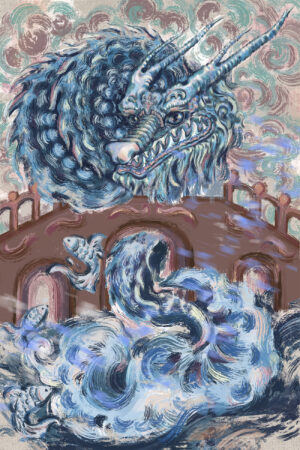
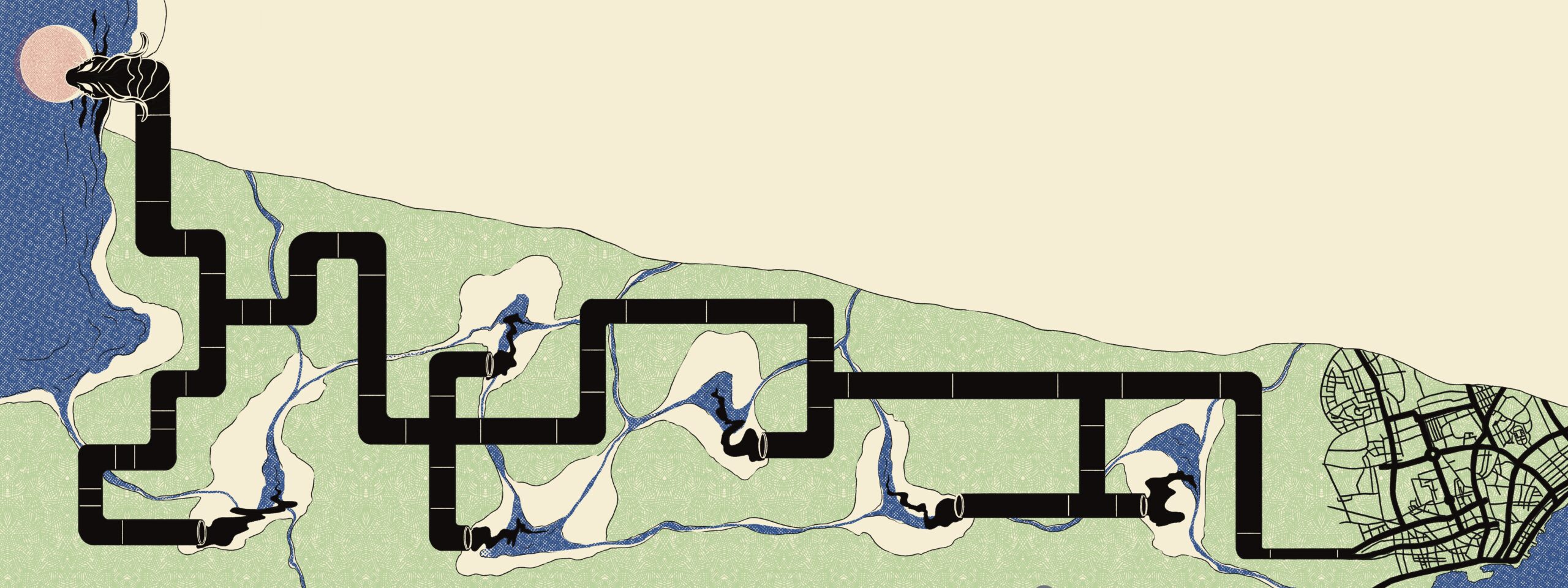
Bakunawa is a giant sea dragon, whose tale spins a beautiful conceptualization before the understanding of eclipses. This Illustration re-imagines the story about greed into a modern setting of a serpent-like pipeline, consuming finite resources.
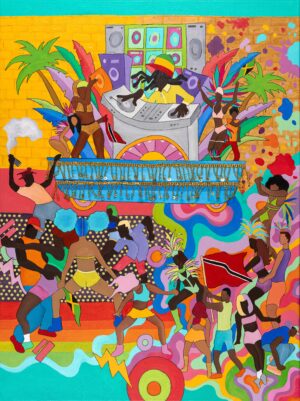
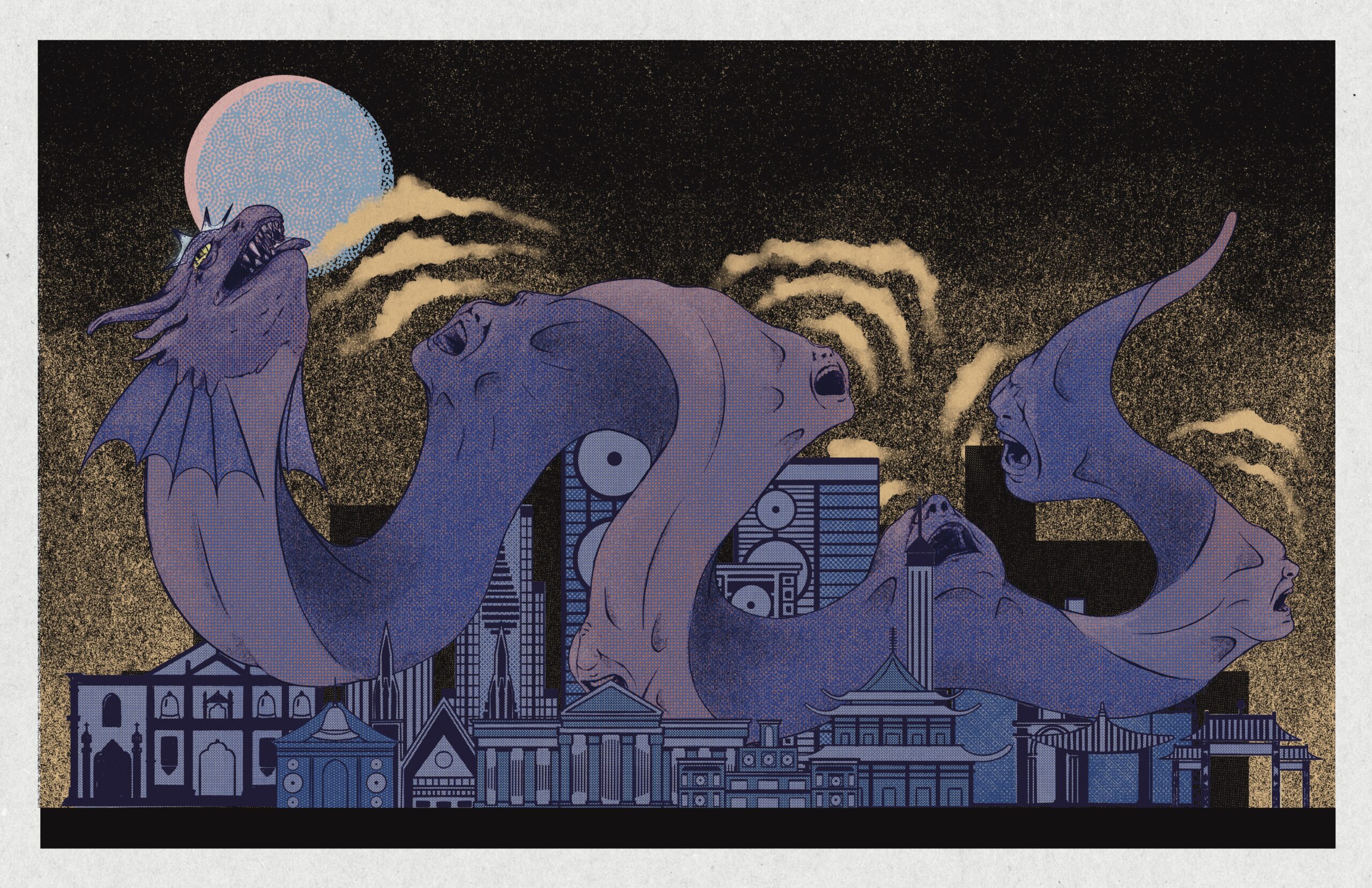
Another Bakunawa, with the focus on specific points of the story in which the creature is defeated by people rallying together and making tons of noise. This is re-contextualized into an image of the claustrophobic noise pollution in the city.
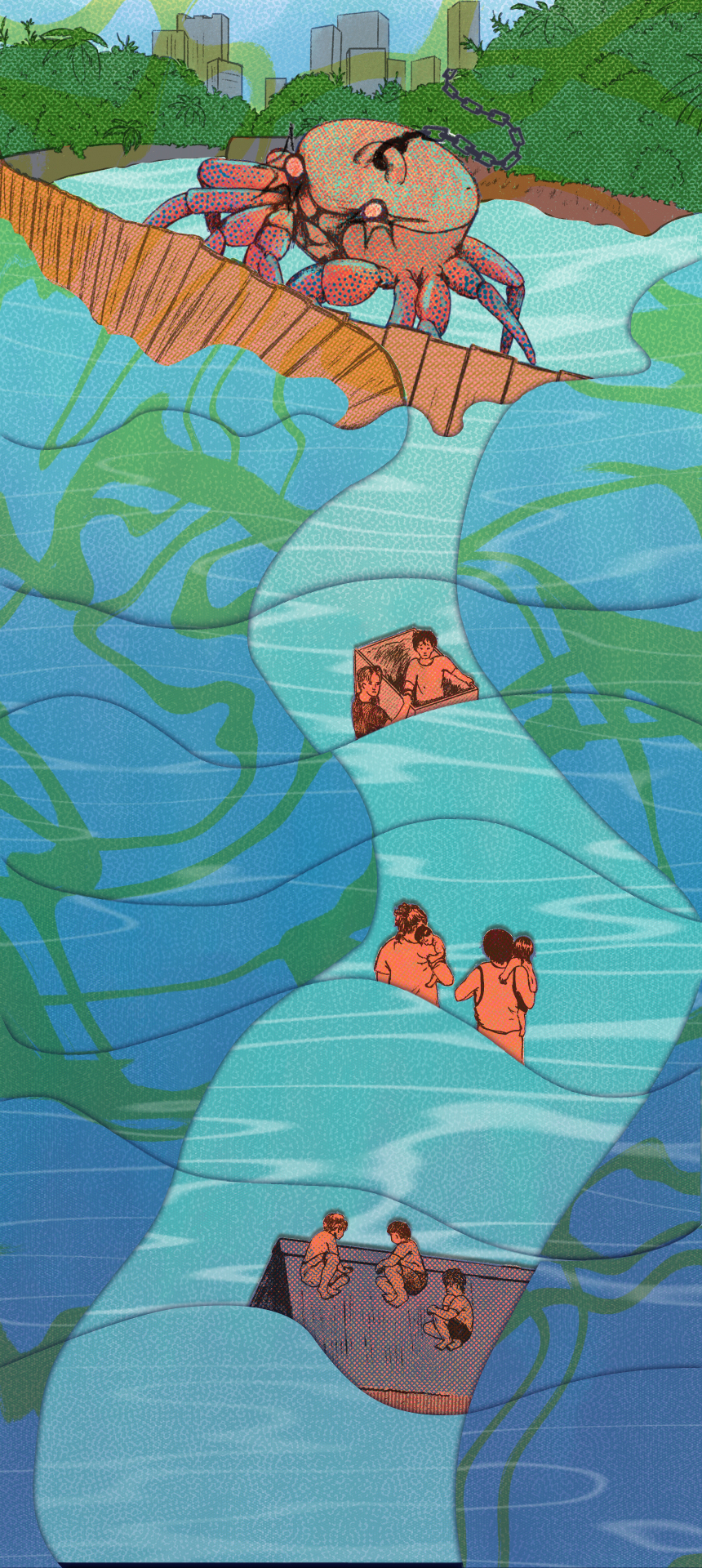
Tambanokano is a colossal crab that controls the high and low tides. Here it represents the unfinished flood barriers and broken promises of flood prevention projects left unfulfilled.
An expansion of the house scene in Illu #7 in which the family lives in constant fear of their home getting flooded.
A collection of collage-based work that retells and re-contextualizes Filipino folklore as creatures that represent nature and symbolize the problems it faces from human interventions.